One Quarter, One Life: How Indie Devs Are Reviving the Magic of Games That Just Work
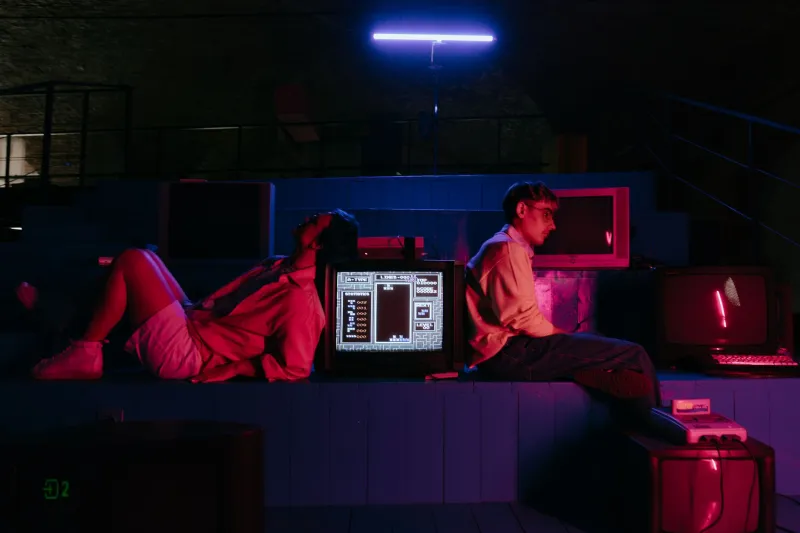
There's a moment every gamer knows. You pick something up, and within thirty seconds you completely understand it. No tutorial pop-ups. No skill trees. No forty-minute opening cinematic. You just get it — and then you lose, and you immediately want to try again.
That feeling? It basically disappeared from mainstream gaming for about a decade. Then indie developers started quietly bringing it back.
Right now, some of the most-played, most-talked-about games in America aren't massive open worlds or cinematic blockbusters. They're tight, focused, almost brutally simple experiences built by small teams — sometimes just one or two people — who looked at classic arcade design and decided the old ways were actually the right ways.
The Reaction Against Complexity
To understand why this is happening, it helps to understand what indie developers are reacting against.
The last fifteen years of AAA game development have trended relentlessly toward scale. Bigger maps. Longer stories. More systems layered on top of systems. Games that take thirty hours just to get "good." The production values are genuinely staggering, but somewhere along the way, a lot of players started feeling like gaming had become a second job.
Developers noticed. Particularly the ones working outside the big studio machine.
"I kept asking myself why I was spending six hours in a game before it felt fun," says one indie developer who released a breakout arcade-style shooter in 2023. "Classic arcade games answered that question in the first ten seconds. I wanted to get back to that contract with the player — here's what you do, here's what happens, go."
That philosophy is showing up everywhere in the indie space. Games like Vampire Survivors, Brotato, 20 Minutes Till Dawn, and Nuclear Throne have collectively racked up tens of millions of players by committing hard to a simple core loop and then polishing that loop until it gleams. The controls fit on one hand. The objective is always obvious. Death is fast and restarts are instant.
Sound familiar? It should. That's literally the design language of Pac-Man, Galaga, and Donkey Kong.
Constraints as a Creative Engine
Here's something counterintuitive: a lot of indie developers will tell you that limiting what they build makes the final product better.
When you're a small team without a $200 million budget, you can't compete with Rockstar or Naughty Dog on spectacle. So you don't try. Instead, you ask: what's the one thing this game does, and how do we make that one thing feel incredible?
That forced focus tends to produce games with incredible game feel — the tactile satisfaction of a jump that lands perfectly, a shot that connects with a crunch, a dodge that barely threads through a wall of projectiles. It's the kind of thing you notice in the first thirty seconds and can't stop chasing for hours.
The roguelite genre has become a particularly fertile ground for this approach. Games like Hades and Dead Cells have the visual and narrative polish of much bigger productions, but at their core they're basically modern arcades — you run, you fight, you die, you run again. The loop is the game. Everything else is decoration on top of something that was already working.
Why Modern Players Are Ready for This
There's a generational thing happening here, too.
Millennials who grew up pumping quarters into machines at the mall or grinding through NES games with no save states are now adults with limited time. They remember what it felt like when games respected your schedule. A twenty-minute session could be complete and satisfying. You didn't need to block off a weekend to make meaningful progress.
Gen Z players, meanwhile, have grown up with mobile gaming and short-form video — they're already primed for experiences that deliver instant gratification. The dopamine loop of a well-designed arcade game maps almost perfectly onto the attention patterns of someone who grew up on TikTok and Reels.
Both groups are finding a home in this new wave of stripped-down games.
"There's no barrier between wanting to play and actually playing," explains one player who's logged hundreds of hours in browser-based indie games. "I open it, I'm in. I close it, I'm done. It doesn't make me feel guilty for stopping."
The Browser and Mobile Pipeline
One reason this indie arcade revival is gaining so much traction in the US specifically is distribution. Classic arcades required you to physically be somewhere. Console gaming requires hardware. But a huge chunk of the new wave of simple, addictive indie games can be played in a browser window or downloaded in thirty seconds on a phone.
Platforms like itch.io have become incubators for this kind of design, with developers releasing small, focused games to immediate audiences. When something clicks — when the game feel is right and the loop is satisfying — word spreads fast. A game made by one person in a few months can end up with millions of plays.
The economics are different too. Without massive development costs to recoup, indie developers can price games at five or ten dollars, or release them free entirely. That low friction entry point mirrors the original quarter-per-play model of the arcade era more closely than anything else in modern gaming.
Simple Isn't the Same as Easy
One thing worth clarifying: "simple" doesn't mean "shallow" or "easy to make." Designing a game that feels intuitive and addictive from the very first moment is genuinely hard. Arguably harder than building something complex.
With a complex game, you can hide bad design behind systems and progression. With a simple game, everything is exposed. If the controls feel slightly off, the player notices immediately. If the feedback loop doesn't pay off, they drop it in ninety seconds.
The developers who are nailing this new arcade revival have usually spent enormous amounts of time on what the industry calls "juice" — the screen shake, the sound effects, the particle explosions, the way the score pops up after a kill. These details cost nothing in terms of gameplay complexity but make the whole experience feel alive and responsive in a way that keeps you coming back.
That's the real inheritance from the golden age of arcades. Not the pixel art aesthetic (though that's fun too). Not the difficulty. It's the commitment to making every single interaction feel worth it.
The Arcade Is Everywhere Now
The old arcade was a physical place — a room full of machines, each one shouting for your attention with lights and sounds. Today's arcade is distributed across a million browser tabs, app stores, and indie storefronts. The machines are invisible, but the design philosophy is the same.
Pick it up fast. Feel it immediately. Want to do it again.
Indie developers figured out something the big studios are still catching up to: players don't always want more. Sometimes they just want something that works, something that's fun from the first second, and something that trusts them enough to get out of the way.
One quarter. One life. Same magic, brand new era.


