Quarters, Joysticks, and Craft Beer: How Retro Arcades Became America's Coolest Hangout
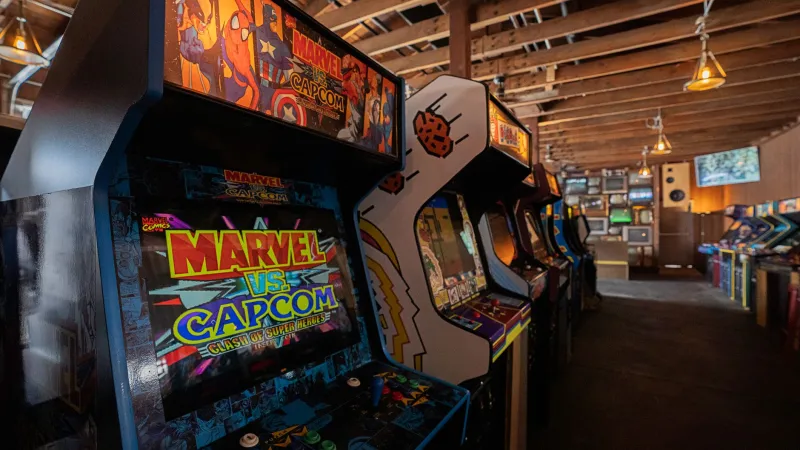
Walk into a place like Emporium Arcade Bar in Chicago on a Friday night and you'll immediately notice something unexpected: it's packed. Not with gray-haired nostalgia chasers, but with a genuinely mixed crowd — 20-somethings in band tees mashing buttons on Street Fighter II, couples competing at Skee-Ball, and groups of friends huddled around a Pac-Man cabinet nursing local IPAs. The vibe is electric, loud, and somehow totally welcoming.
This is the new American arcade. And it's nothing like what you remember.
From Mall Staple to Cultural Relic — and Back Again
The original arcade golden age ran roughly from the late 1970s through the early 1990s. Titles like Donkey Kong, Galaga, Mortal Kombat, and Time Crisis dominated the landscape. Arcades were everywhere — shopping malls, pizza joints, movie theaters, bowling alleys. Then home consoles got good. Really good. Why pump quarters into a machine when you could play from your couch?
By the early 2000s, the American arcade was largely declared dead. A few Dave & Buster's locations kept the format alive in a more commercialized form, but the scrappy neighborhood arcade? Gone.
What nobody predicted was the comeback.
Starting around 2010 and accelerating hard through the 2020s, a new breed of entertainment venue began popping up in cities like Portland, Austin, Nashville, and Brooklyn. These weren't your dad's arcades. They were fully licensed bars with carefully curated libraries of restored vintage cabinets, often dozens or even hundreds of machines, all set to free play. Pay a cover charge or grab a drink, and the games are yours for the night.
"We wanted to create a place that felt genuinely fun for adults," says Marcus Hale, co-owner of Pixel & Pour, a retro arcade bar in Denver. "There's something magical about standing next to a stranger and both of you freaking out over a Galaga high score. You can't replicate that with a phone app."
Why Millennials and Gen Z Are Obsessed
It might seem counterintuitive that younger generations — people who grew up with PlayStation 4s and Steam libraries — would be drawn to games with four-color graphics and single-button controls. But the appeal makes more sense when you dig into it.
For millennials, the nostalgia factor is real and powerful. These are games they played as kids, and revisiting them in a social, adult-friendly space hits differently than booting up an emulator at home. There's a physicality to it — the weight of a real joystick, the satisfying clunk of a button, the cabinet art that was genuinely stunning for its time.
For Gen Z, it's almost the opposite. These games are vintage, and vintage is cool. The same cultural instinct that drives vinyl record sales and film photography has made classic arcade cabinets genuinely fashionable. Playing Centipede in 2025 carries the same energy as wearing a Led Zeppelin shirt — it's a statement.
"Our youngest regulars have never played these games before, and they love them," says Hale. "There's no tutorial, no onboarding. You just figure it out. That's actually refreshing compared to modern games that take 20 hours before they get interesting."
The Machines Themselves: A Restoration Economy
Behind every great arcade bar is a surprisingly robust supply chain of collectors, restorers, and manufacturers keeping the hardware alive.
Companies like Arcade1Up have made headlines by producing scaled-down, home-friendly reproductions of classic cabinets — things like miniature Mortal Kombat towers and tabletop Ms. Pac-Man units. These have sold millions of units through retailers like Walmart and Target, proving the appetite for physical arcade hardware is very real.
On the higher end, dedicated restoration shops across the country — many operating out of garages and small warehouses — source original cabinets, rebuild circuit boards, replace monitors with modern equivalents, and return machines to playable condition. It's painstaking work, and original cabinets in excellent condition can fetch thousands of dollars.
For arcade bar owners, sourcing and maintaining a library of 50 to 200 machines is a genuine logistical challenge. "You're basically running a museum that also serves cocktails," laughs Jamie Torres, who manages the gaming floor at a retro bar in Austin. "Something always needs fixing. But when everything's working and the room is full? It's worth every bit of it."
The Games That Never Get Old
So which titles are actually drawing crowds in 2025? According to multiple arcade bar operators, a few classics consistently outperform everything else:
- Pac-Man / Ms. Pac-Man — Universal appeal. Grandparents and toddlers understand this game instantly.
- Street Fighter II — Competitive gaming before esports existed. Still generates genuine rivalries.
- Donkey Kong — The high score culture around this game, immortalized in the documentary The King of Kong, gives it legendary status.
- Mortal Kombat II — The fatalities still get reactions from people who've never seen the game before.
- Tron — Visually unlike anything else from the era. The spinner control feels futuristic even today.
- NBA Jam — Cooperative and wildly fun. "He's on fire!" never gets old.
Pinball machines, often overlooked in nostalgia conversations, are also massive draws. Titles based on The Addams Family, Medieval Madness, and Attack from Mars have devoted followings, and well-maintained tables command premium prices on the collector market.
More Than Just Games
What the retro arcade bar boom has really proven is that people crave shared, in-person entertainment experiences — and that gaming, when done right, is one of the best vehicles for it. Unlike a movie or a concert, arcade games are interactive, competitive, and inherently social. They break the ice. They create moments.
For ArcadeZone readers, this resurgence is genuinely exciting. Whether you're thinking about hunting down an Arcade1Up cabinet for your basement, planning a night out at your nearest retro bar, or just feeling the itch to find out if you still remember the Konami Code — the arcade world is more alive than it's been in decades.
The pixels are back. And they brought craft beer.