Lost in Legal Limbo: The Classic Games You Can't Buy Anywhere Anymore
Imagine trying to buy a copy of a beloved game you grew up with — one you'd pump quarters into at the local pizza joint or beg your parents to rent from Blockbuster on a Friday night. You hop online, check every major digital storefront, and come up empty. Not because the game was bad. Not because nobody cares. But because somewhere between a corporate bankruptcy, an expired music license, and a rights dispute between three different companies that may or may not still exist, your favorite childhood classic has become legally untouchable.
This isn't a rare edge case. It's an increasingly common reality for thousands of games from the '80s and '90s — and it's getting worse, not better.
The Corporate Graveyard Nobody Talks About
When a game studio closes its doors, the games don't just fade quietly into the sunset. They get swallowed up by a tangle of assets, contracts, and intellectual property rights that can take years — sometimes decades — to sort out. Publishers get acquired. Parent companies restructure. The original developers scatter to the wind. And somewhere in the chaos, the rights to a game that millions of people loved end up sitting in a filing cabinet nobody can find.
Midway Games is a perfect example. The legendary arcade publisher behind titles like Mortal Kombat, NBA Jam, and Gauntlet went bankrupt in 2009. Its assets were auctioned off piecemeal to various buyers. Some franchises found new homes. Others? They've been in legal purgatory ever since, with competing claims making any kind of official re-release a nightmare to navigate.
And Midway is just one name on a very long list. THQ, 3DO, Acclaim Entertainment, Interplay — the gaming industry's corporate graveyard is massive, and it's full of beloved franchises that nobody currently has the clean, uncontested right to sell you.
When the Soundtrack Becomes the Problem
Even games that do have a clear rights holder can end up in limbo for a completely different reason: music licensing.
Back in the day, developers licensed popular songs to make their games feel culturally relevant and exciting. Racing games loaded with chart-toppers. Sports titles packed with era-defining hip-hop and rock tracks. It felt amazing in 1997. It's a legal headache in 2024.
Music licenses are typically time-limited. When they expire, the publisher has to renegotiate — and that costs money. If the game isn't generating enough revenue to justify the cost, the math just doesn't work out. So instead of relicensing the music, publishers quietly pull the game from storefronts. Sometimes they release a version with replacement tracks. Often, they just let it disappear.
The Tony Hawk's Pro Skater series is probably the most famous case study here. The original games were cultural touchstones, their soundtracks as iconic as the gameplay itself. Getting those tracks relicensed for the celebrated 2020 remaster reportedly cost Activision a small fortune — and even then, not every song made the cut. For games with smaller audiences and tighter margins, publishers simply don't bother.
The Preservation Problem
Game preservationists have been sounding the alarm about this for years, and they're increasingly frustrated by how little mainstream attention the issue gets.
Organizations like the Video Game History Foundation have done extensive research on the scope of the problem. Their findings are striking: a significant majority of games released before the year 2000 are effectively out of print, with no legal way for the average person to purchase and play them. We're talking about a massive chunk of gaming's creative history becoming inaccessible within a single generation.
For context, imagine if the film industry operated the same way — if most movies from the '80s simply couldn't be streamed, rented, or purchased because the studio that made them no longer existed and nobody had sorted out who owned the rights. There would be an uproar. But because games are still sometimes dismissed as a juvenile medium, the cultural conversation hasn't caught up to the reality of what's being lost.
Libraries and archives that try to step in face their own legal obstacles. The Digital Millennium Copyright Act has historically made it difficult for institutions to legally preserve and provide access to older games, even for research and educational purposes. Recent exemptions have helped at the margins, but the legal framework still lags far behind the actual preservation needs.
Collectors and the Gray Market
In the absence of legitimate options, a thriving secondary market has filled the void — for better and worse.
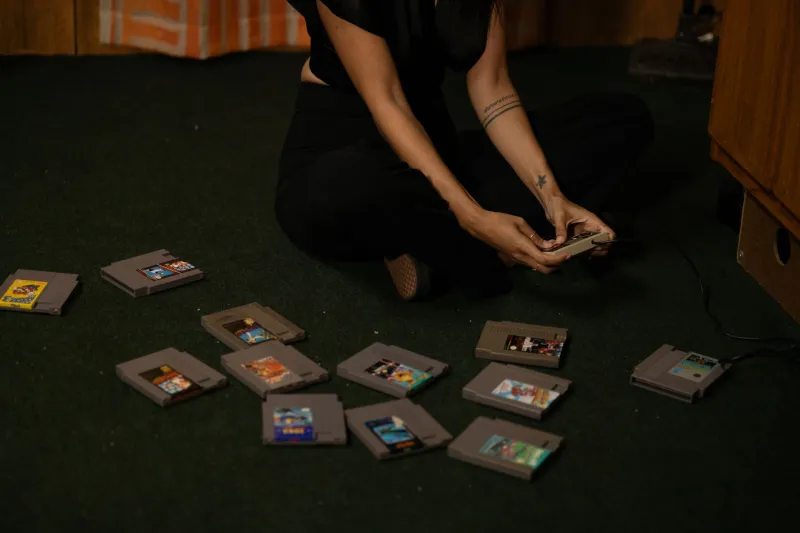
Original cartridges, discs, and arcade boards from the '80s and '90s have become serious collector's items. Prices for rare titles have gone absolutely stratospheric in recent years. A mint-condition copy of certain NES games can fetch thousands of dollars. Authenticated arcade PCBs for cult classics can run even higher. For most people, that's simply not a realistic path to playing the games they remember.
The ROM and emulation scene has long served as an unofficial preservation layer, and plenty of people use it unapologetically. But it exists in a persistent legal gray zone that makes it uncomfortable territory for anyone who wants to do things by the book. Publishers have historically been inconsistent about enforcement, which adds another layer of uncertainty.
What's clear is that the current system isn't working for anyone who actually cares about gaming history — not collectors, not preservationists, and definitely not the average person who just wants to replay something they loved as a kid.
What Would Actually Help
So what's the fix? There's no single silver bullet, but people working in preservation tend to agree on a few things.
Expanded legal exemptions for libraries and archives would be a meaningful step forward. If institutions could legally preserve and provide controlled access to games that are no longer commercially available, it would at least keep the history alive even when the commercial market fails.
Some advocates push for a concept similar to what exists in other creative industries: a formal mechanism for dealing with "orphan works" — intellectual property where the rights holder is unknown, defunct, or simply unresponsive. A legal framework that allows games to be preserved and made available after a certain period of commercial inactivity could unlock a huge portion of the back catalog.
On the industry side, more publishers could follow the example of companies that have made genuine efforts to bring back their classic libraries — even if it requires creative licensing solutions or releasing games without their original soundtracks as a compromise.
The Clock Is Ticking
Here's the uncomfortable truth: this problem gets harder to solve with every passing year. Physical media degrades. The people who remember the technical specifics of old hardware age out of the workforce. Corporate paper trails get messier and more tangled. The window to preserve gaming's early decades isn't open forever.
For anyone who grew up pumping quarters into arcade machines or blowing into cartridges to make them work, the stakes feel personal. These weren't just games — they were cultural experiences, shared memories, formative moments. Letting them disappear because the legal infrastructure can't keep up feels like a genuine loss.
The arcade era built the foundation that modern gaming stands on. The least we can do is fight to keep that foundation visible.