Read Me First: The Flimsy Little Booklets That Became Collector's Gold
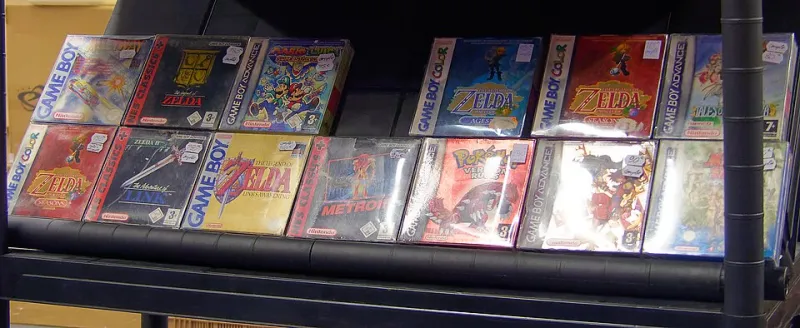
Photo: Thomas Bresson, CC BY 4.0, via Wikimedia Commons
There was a ritual to it. You got the box home, peeled the plastic off, opened the flap, and the first thing that came out wasn't the cartridge — it was a booklet. Twenty, thirty, sometimes sixty pages of it. You read it in the car. You read it in the bathroom. You read it before you were allowed to plug anything in.
Then, quietly, it disappeared. Digital downloads don't come with a booklet. Even physical releases now ship with a single folded sheet showing a controller layout and a QR code. Which is exactly why the old ones have turned into collector's items.
The box used to be the whole product
In the 1980s and 90s, the package was doing real work. Games were expensive, store displays were small, and there was no trailer reel to convince you. The manual was the game's first impression — sometimes its only tutorial, often its only story, and nearly always its only explanation of what the fourteen buttons on the controller were supposed to do.
It was also the manufacturer's chance to look like a legitimate enterprise. Nintendo's manuals are legendary for their tight, friendly layouts and their illustrated characters walking you through the basics. Sega's leaned flashier. PC manuals, freed from cartridge size limits, ballooned into genuine reference books — some shipped with hundreds of pages, spiral bound, heavier than the floppy disks they described.
What's actually in there
This is where the appeal really lives, because the contents were strange in a way that modern games can't easily replicate.
Maps. Fantasy and RPG manuals often included a printed world map or a dungeon key. Some were genuinely necessary. Others were gorgeous, hand-painted, and immediately taped to a bedroom wall.
Lore before the game started. The Final Fantasy manuals of the 90s opened with character bios and world histories that had nothing to do with gameplay. Whole mythologies, printed on cheap paper, that you read in advance like a trailer in prose.
Copy protection. A very specific joy: PC manuals that included code wheels, look-up tables, or a page you had to reference before the game would load. Lose the booklet, lose the game. Ownership was physical.
Safety warnings with a sense of humor. Modern manuals say consult a physician before playing. Older ones warned about playing in a room with poor lighting, taking a fifteen-minute break every hour, and — in one memorable Nintendo case — not sitting too close to the TV. All of it delivered in bright, cheerful type and cartoon illustrations, as though seizure risk were a friendly houseguest.
The weird stuff. Recipes. Short stories. Interviews with the developers. A mail-in form for a newsletter. The back pages were a grab bag, and nobody was really editing it.
Why the prices have climbed
Two things happened at once. First, a generation that grew up with these booklets hit their thirties and forties with disposable income. Second, the supply is fixed and shrinking. Paper from 1991 gets lost, water damaged, torn, or thrown out by a parent who didn't know any better.
Condition drives everything. A manual with a crease along the spine, a coffee ring, and a child's name in marker on the cover is worth a couple of bucks. The same booklet, unmarked, flat, and complete, can fetch ten or twenty times that. The real premiums go to the rare stuff: manuals for limited-run console releases, PC big-box references, and anything still attached to its original insert cards, posters, or registration mailers.
That's also why the term CIB matters so much in collecting circles. Complete in box means the game, the case, and the manual. A missing booklet can knock a meaningful chunk off a game's value, and sellers know it.
Buying smart, not fast
If you want to start a collection, here's the boring advice that saves the most money. Buy one game you actually love, complete, and stop there for a while. Look for spine creases and water stains in the listing photos, since sellers photograph covers and not page edges. Ask whether any pages are cut out — a shockingly common problem with manual maps. And be skeptical of reproduction booklets, which are now easy to print and sometimes sold without disclosure.
Beyond the nuts and bolts, there's the reason most people bother. These booklets are a record of a moment when games thought of themselves as objects you owned rather than services you accessed. They explained, welcomed, and occasionally over-warned. Hold one thirty-year-old manual and you can feel how much care went into something that was probably read once and thrown in a drawer.
That drawer was a mistake. A lot of collectors are happy to fix it.