The Claw Doesn't Lie: What Six Years Behind the Prize Counter Taught Me About Actually Winning
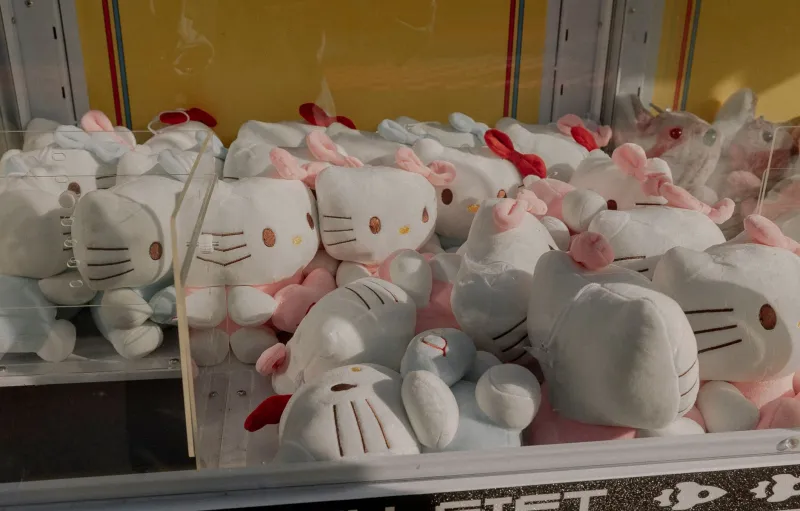
I spent six years of my life with my forearms inside claw machines. Not playing them — fixing them. Clearing jams, swapping out burned-out bulbs, re-hanging the same sad unicorn that had been dangling off a prize pile since spring. And in that time I learned the thing that every operator knows and almost no player believes: the claw is not random. It never was.
That's not a conspiracy. It's a setting. And once you understand the setting, the machine stops looking like a carnival trick and starts looking like a vending machine with extra steps.
The Claw Isn't Weak — It's Tuned
There's a persistent myth that claw machines are just built with wimpy claws. Not quite. Most modern units run on a clutch coil that can grip at one of several strength levels, and the board cycles between them. Typically you get a full-strength grip, a medium grip that can carry something light, and a weak grip that opens the moment the claw starts to lift. The mix is governed by a payout percentage — a target ratio of prize value handed out versus money taken in.
Operators set that percentage. Somewhere around 20 to 35 percent is common for a machine stocked with plush that costs the location two to four bucks a piece against a one- or two-dollar play. Run the math and you'll see the whole design: the machine is not trying to stop you. It's trying to lose slowly.
That's an important distinction. Slowly is the key word.
What Six Years of Jams Taught Me
Here's the part that frustrates players most: a machine can be perfectly fair and still eat twenty dollars of your money. Fair, in operator terms, means the payout percentage gets hit eventually, not that it gets hit this round. There's no counter that resets when you walk away. There's no hot streak you can time. The board doesn't know your name and it doesn't care about your kid's birthday.
What the board does know is prize weight, claw position, and how much slack is in the carriage. Which is why the players who win most often aren't the ones who play longest. They're the ones who read the machine before dropping a single token.
The Stuff That Genuinely Improves Your Odds
Pick the prize, not the machine. Prizes sitting on top of the pile, near the chute, and light enough to ride a medium grip are your best bets. If everything good is buried under a mountain of knockoff octopuses, walk away. You are not digging out. Nobody digs out.
Watch the claw's resting alignment first. Drop the claw with no prize under it once and see where the prongs actually land relative to the center. Carriages drift. A machine that's two inches off will ruin an otherwise perfect pick, and you want to know that before you spend money.
Favor light, soft, and slightly irregular. A small plush with a limb sticking out gives the claw something to hook. A boxed item or a tightly stuffed square gives it nothing. Weight is the enemy — the grip that lifts a beanie baby drops a plush basketball every time.
Freshly stocked machines are not automatically better. They're better because the good prizes are on top. That's it. If the machine was stocked two hours ago and picked clean of the easy stuff, you're actually worse off.
Ask the staff when it gets restocked. I cannot tell you how many times someone won big because they politely asked a bored employee a question. Restock schedules are not secret. Nobody's guarding them.
Don't chase. This is the one that costs people the most money. A machine that has just paid out is not due. A machine that has eaten forty dollars has no obligation to you. The payout percentage is real across thousands of plays, which means it is completely useless across your next five.
Myths I'd Like to Retire
The double-tap on the button. Doesn't do anything. The button sends one signal.
Shaking the machine. Please don't. You'll trip the tilt sensor on newer units, and on older ones you'll knock a prize loose in a way that gets the machine shut off until I drive over.
The claw getting stronger the longer you play. Not a thing. There's no loyalty program.
Grabbing the plush by the tag. The tag tears. It always tears. It has torn since 1987 and it will tear in 2026.
Why I Still Love These Ridiculous Machines
Here's the confession part. I spent years grumbling about claw machines, and I still drop a dollar on one when I see a well-stocked unit in a movie theater lobby. Because when it works — when the claw closes on something soft and light and the carriage actually carries it to the chute, and it drops, and the flap swings — that's a genuinely great ten seconds. It's a small, physical, completely unnecessary joy.
The machine is stacked against you. It always was. But it's stacked against you in a predictable, tunable, slightly shabby way, and that means the smart play is a real play. Read the machine. Pick your prize. Spend four dollars, not forty. And when it drops, enjoy it — because the operator is quietly hoping you'll walk away and let the percentage catch up with somebody else.