Old Buttons, New Hype: The Retro Controller Revival Nobody Saw Coming
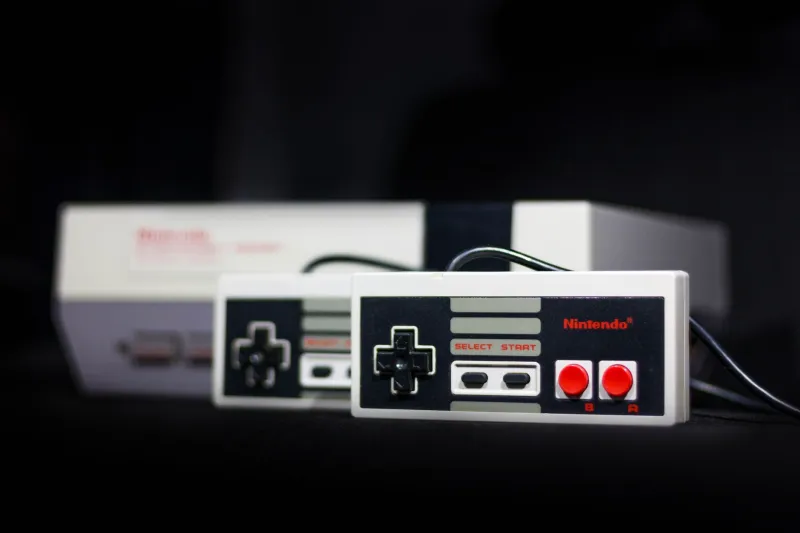
Walk into any gaming-focused corner of the internet right now and you'll find a surprisingly heated debate happening. Not about which console is winning the hardware war or which live-service game is worth your subscription fee — but about whether a 30-year-old gamepad design might genuinely be better than anything you can buy brand new today.
Spoiler: a lot of people think the answer is yes. And they're putting real money where that opinion is.
The Numbers Don't Lie
Retro and replica controller sales have quietly surged over the past two years. 8BitDo, the Hong Kong-based peripheral maker known for its faithful recreations of classic NES, SNES, and Sega Genesis layouts, reported record-breaking US sales in late 2023. Meanwhile, products like the SNES-inspired Retroflag controllers and Analogue's premium retro hardware have developed waiting lists. On eBay and StockX, authentic original controllers — particularly pristine Super Nintendo and N64 gamepads — are selling for multiples of their original retail price.
This isn't just collector behavior. Casual players are buying these things to actually use them.
"I bought an 8BitDo Pro 2 last year and I haven't touched my DualSense since for anything that doesn't require the adaptive triggers," says Marcus T., a 34-year-old from Austin who describes himself as a "weekend warrior" gamer. "It just feels right in my hands in a way that's hard to explain."
What Ergonomics Actually Says
It might not be that hard to explain after all. Dr. Renata Simms, an occupational therapist based in Chicago who works with repetitive strain patients — including a growing number of gamers — says the appeal of older controller designs has a physiological basis.
"Many retro controllers were designed around a fairly neutral wrist position and minimal reach distance between buttons," she explains. "When you add asymmetric grip designs, extra triggers, touchpads, and haptic motors, you're adding weight and complexity that can actually increase fatigue during long sessions."
The original SNES controller, she notes, is almost textbook in its simplicity: flat, lightweight, with buttons positioned to minimize finger travel. "For casual play — which is most people's play — that's often enough. And it's kinder to your hands."
Modern controllers aren't bad, she's quick to add. Features like Sony's adaptive triggers and Microsoft's hair-trigger locks genuinely serve hardcore players. But for someone playing an hour of retro platformers on a Friday night, those features are essentially overhead.
The Collector's Perspective
For some buyers, authenticity is the whole point. Devin Okafor runs a modest but well-followed Instagram account dedicated to controller preservation and has spent years hunting down pristine originals at garage sales, flea markets, and retro game shops across the Midwest.
"There's a difference between a replica and the real thing," he says. "The weight of an original NES dogbone controller, the specific click of a Genesis six-button pad — those things aren't perfectly reproducible. The replicas are great, but collectors know."
Devin estimates he's invested around $2,000 in controllers over five years, a figure he acknowledges sounds excessive but contextualizes quickly. "People spend that on a single modern GPU upgrade. I've got a collection I can actually hold and play with. The tactile experience is the whole hobby."
Which Retro Controllers Are Actually Worth It?
Not everything with a D-pad and a retro aesthetic deserves your money, though. The nostalgia market has attracted its share of cheap knockoffs and cynical cash-grabs. So what's actually worth buying?
The legitimate picks:
- 8BitDo Ultimate and Pro 2 series — consistently praised for build quality, wireless reliability, and genuine ergonomic attention
- Analogue's controllers — expensive but built with premium materials and designed specifically for their retro consoles
- Original hardware in good condition — if you can find a clean SNES or Genesis controller at a fair price, the real thing still holds up remarkably well
The stuff to skip:
- Generic "retro-style" pads flooding Amazon with no-name branding — these usually have mushy d-pads and poor connectivity
- Licensed retro replicas from major brands that charge premium prices for budget internals
- Anything marketed primarily as a display piece that also claims to be functional
Why Complicated Stopped Being Cool
There's something bigger happening here beyond ergonomics and collector culture. The retro controller trend is, at least in part, a reaction to feature bloat — the same instinct driving people back to flip phones and film cameras.
Modern controllers have gotten genuinely impressive. The Xbox Elite Series 2 is an engineering marvel. The DualSense is probably the most innovative gamepad in decades. But "impressive" and "what I want for a relaxed Sunday gaming session" aren't always the same thing.
When you pick up a classic SNES pad, there are no settings to configure, no firmware to update, no haptic intensity sliders to fiddle with. You plug it in — or pair it wirelessly if it's an 8BitDo — and you play. That frictionless simplicity is increasingly rare and, for a lot of players, increasingly valuable.
At ArcadeZone, we've always believed that the best gaming experiences aren't necessarily the most technologically advanced ones — they're the ones that get out of your way and let you play. The retro controller revival is living proof that sometimes, the old ways got it right.
The Bottom Line
Retro controllers aren't outselling modern hardware because gamers have given up on innovation. They're winning because a huge segment of the gaming population realized they were paying for features they never use, in a package that's heavier and more complicated than it needs to be.
For casual players, weekend warriors, and anyone who grew up with a SNES in the living room, a well-made retro gamepad might genuinely be the best controller you can own right now. Just make sure you're buying the real deal — and not a nostalgia-branded piece of plastic that'll fall apart in six months.